
Anti-Human Trafficking: Greater New Orleans Human Trafficking Task Force
Greater New Orleans
Human Trafficking Task Force

Greater New Orleans
Human Trafficking Task Force
Written by Jennifer Paul Ray,
Coordinator Greater New Orleans Human Trafficking Task Force
On October 1, 2022, Covenant House New Orleans and the Orleans Parish District Attorney’s Office were awarded the joint Department of Justice Office for Victims of Crime Enhanced Collaborative Model Task Force to Combat Human Trafficking program funding. The funding supports the activities of the Greater New Orleans Human Trafficking Task Force, co-led by Covenant House New Orleans and the Orleans Parish District Attorney’s Office along with its Core Team.
The Core Team includes the Federal Bureau of Investigations New Orleans Field Office, Homeland Security Investigations New Orleans Field Office, and United States Attorney’s Office Eastern District of Louisiana. Comprehensive case management funding awarded to Covenant House New Orleans includes the following victim service provider sub-recipients: Eden Centers for Hope and Healing, formerly Eden House; New Orleans Family Justice Center; Sexual Trauma Assault Response (STAR); and Institute for Indian Development.
Collectively, the recipients coordinate under the Office for Victims of Crime’s comprehensive case model with a network of twenty service providers established under a memorandum of understanding. The Task Force partners implement a trauma-informed, victim-centered approach included in pro-active law enforcement investigations and operations and prosecutorial case development. Victims identified by law enforcement are referred to the victim service provider recipients who stabilize victims and support clients through comprehensive care.
This is the third round of funding for the Task Force, which started in 2015. Since its establishment, the Task Force has provided support and services to over 700 trafficked persons and has conducted over 670 new investigations, which resulted in over 250 related arrests and the identification of more than 290 confirmed victims in the Greater New Orleans – Metairie Metropolitan Area.
Social media handles:
Twitter: @GNOHTTF
Facebook: https://www.facebook.com/nolatrafficking/
Website: http://www.nolatrafficking.org/
Twitter: @CovenantHouseNO
Facebook: https://www.facebook.com/CovenantHouseNOLA
Website: https://www.covenanthousenola.org/
Twitter: @orleansparishda
Facebook: https://www.facebook.com/orleansparishda
Website: https://orleansda.com/
This content was produced by Jennifer Paul Ray, Coordinator Greater New Orleans Human Trafficking Task Force, under 15POVC-22-GK-03656-HT and 15POVC-22-GK-03655-HT, awarded by the Office for Victims of Crime, Office of Justice Programs, U.S. Department of Justice. The opinions, findings, and conclusions or recommendations expressed in this manuscript are those of the contributors and do not necessarily represent the official position or policies of the U.S. Department of Justice.

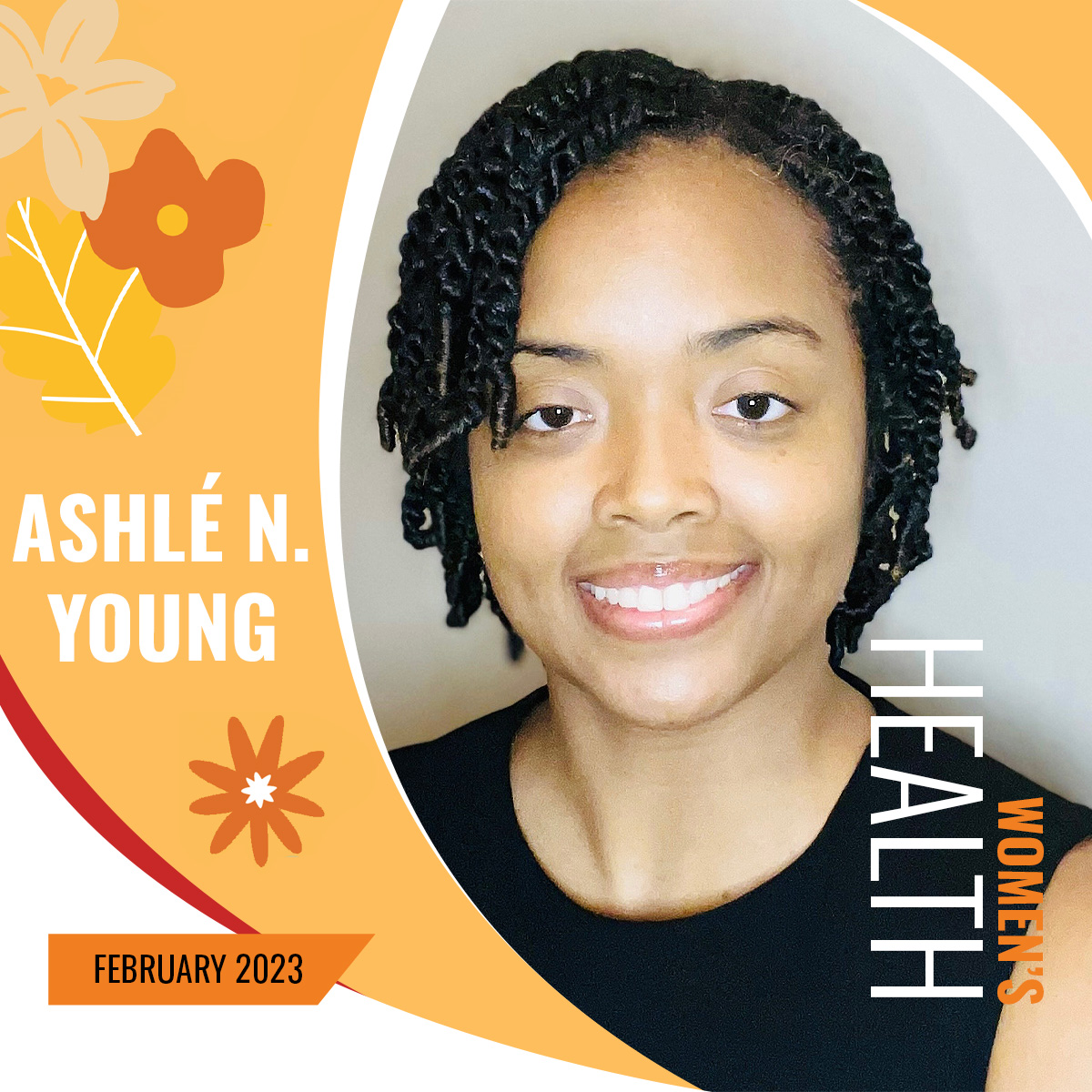





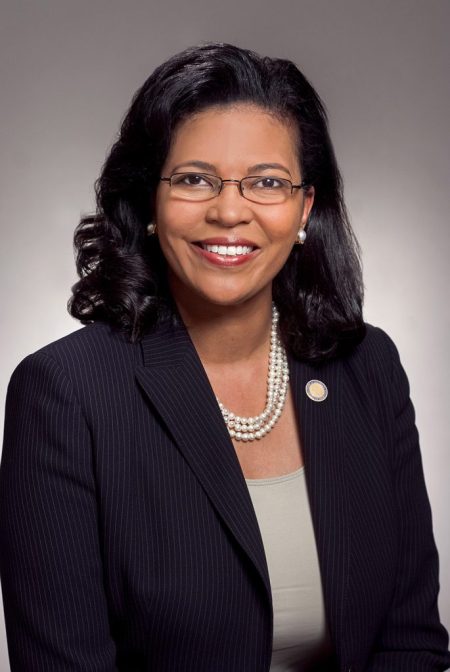
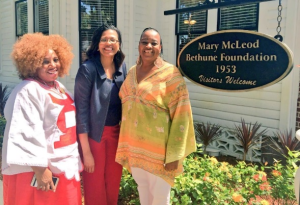
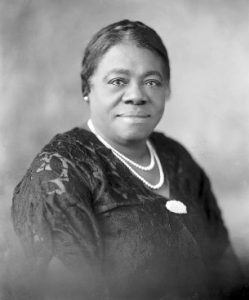 Mary McLeod Bethune was a woman who understood the power of education. She was first in her family to be born free, in the late 1800s, and to receive a formal education. A skilled activist and presidential adviser, her calling was to pay it forward, so with meager funds – $1.50 – but unlimited faith, she opened a school for African American girls in 1904. From these beginnings, her school went on to become Bethune-Cookman College, a Historically Black College (HBCU), and she served as the college’s president. Visiting her home on her college campus, I touched the desk where she worked and stood in the parlor where she hosted leaders as she advocated for education, healthcare and opportunities for women. I spoke to her granddaughters (pictured here) about her relentless commitment to education, equity and opportunity. A women of countless firsts, she is a trailblazer who understood the connection between learning and social mobility and so much more, and used this understanding to improve the lives of so many.
 As we seek to reach our educational goals, one big focus for us is expanding access to dual enrollment. Today almost 29,000 Louisiana students start college in high school and over the past few years we’ve been proud to see an increase of 1,500 African American students participating.
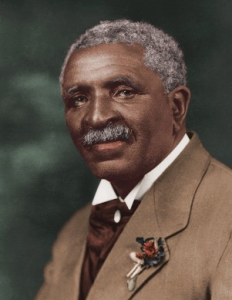 To bring this opportunity to our students, particularly the equipment needed to support career and technical courses, we deployed mobile labs, which now visit high schools across the state. The labs are praised for their utility and effectiveness in getting college-level experiences to high school students. It’s a concept I saw first-hand at another HBCU. This was not a new shiny mobile lab parked out front at Tuskegee University, but a historical one in the museum honoring George Washington Carver. I knew and admired him as an agricultural powerhouse, scientist and inventor, “The Father of the Peanut Industry.” I had heard of his outreach efforts to farmers in communities near and far, but I was delighted to see the
 Whether our students come to a college or university campus or if we bring the learning to them, progress hinges on access to strong, high-quality education that prepares citizens for viable careers and prosperity. I am proud to stand on the shoulders of these African American giants, to learn from them and to answer the call to extend their legacy as fierce advocates for education, equity and talent development. That’s how Louisiana will prosper.